Opals
Opals are one of the earth’s most glorious gifts. Opals are the union of two
mundane substances, water and silica and consist of microscopic spheres that
diffract light like tiny prisms to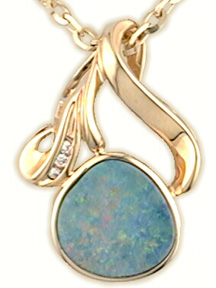 create opalescence- the stone’s
characteristic play of colors. The opal’s stunning range of color is the
result of the size and spacing of the component spheres. Color and
play-of-color dictate the opal’s overall quality. The rarest and most
desirable color in the flash or play-of-color are red or violet followed by
pink, green, and blue. The "body" color of the opal can range from the
familiar pale blues and white all the way to exotic black with dark blue,
dark green and gray in between! There are also faceted orange to red opals
appropriately called fire opals.
create opalescence- the stone’s
characteristic play of colors. The opal’s stunning range of color is the
result of the size and spacing of the component spheres. Color and
play-of-color dictate the opal’s overall quality. The rarest and most
desirable color in the flash or play-of-color are red or violet followed by
pink, green, and blue. The "body" color of the opal can range from the
familiar pale blues and white all the way to exotic black with dark blue,
dark green and gray in between! There are also faceted orange to red opals
appropriately called fire opals.
With its pulsating display of fire and color, opal was long thought to hold magical powers. Opal have symbolized love, life, hope, innocence, purity and truth through the ages. In "Twelfth Night", William Shakespeare refers to opals as "the queen of gems".
Australia is the source of 90% of the world’s opals. Other sources
include Mexico and the USA Opals, which rate 5 to 6.5 on the Moh’s Scale
of Hardness, are fragile and should be treated accordingly. Opals
shouldn’t be stored in a hot place (such as under a lamp) and should be
cleaned with just a damp soft, cotton cloth. Care should be taken to
protect it from scratches, sharp blows, and house hold chemicals.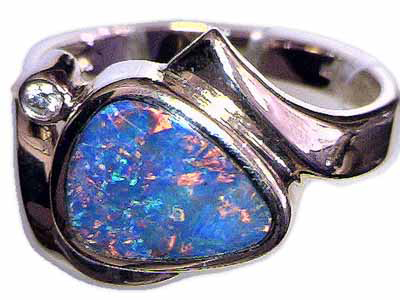
Opal is the tradition birth stone for the month of October as well as the accepted anniversary gemstone for the fourteenth year of marriage. Perhaps, because they are fragile, opals received the unearned reputation as being bad luck to wear if not your birth stone. They have outlived that outdated notion. Its rainbow of color makes opal an ideal fashion accessory with an ageless year-round appeal.
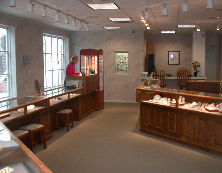
There is parking available directly behind our building.
Please take the opportunity to view our e-commerce site. The site can be viewed on your mobile device as well.
Shop Now
You can view additional examples of Laney's jewelry at this site as well! There are a lot of images, it will take a moment to load the page.
Our Hours:
Tues-Fri 11:00 AM - 6:00 PM
Sat 11:00 AM - 5:00 PM
5121 Center Street, Suite 103
Williamsburg, VA 23188
(757) 229-7333